The Trade Marks Act is quite clear, section 3(3)(a)of the 1994 Act states:
“(3) A trade mark shall not be registered if it is –
a) contrary to public policy or to accepted principles of morality”
Marks that may fall foul of section 3 (3) can be broadly classified into three categories:
a) explicit/taboo signs, b) marks with religious connotations, and c) marks with criminal connotations.
In addition terms that violate public policy are likely to upset recognised moral standards, such as language related to illegal drugs. In section 3(3)(a), the word “public policy” refers to the denial of protection to marks that could cause public disturbance or raise the possibility of criminal or other offensive activity. Marks that appear to be trivialising criminal behaviour, like the word “stolen,” or those have criminal overtones, such as those connected to violence, illegal substances, counterfeiting, or racial, religious, or discriminating traits, must always be used with caution.
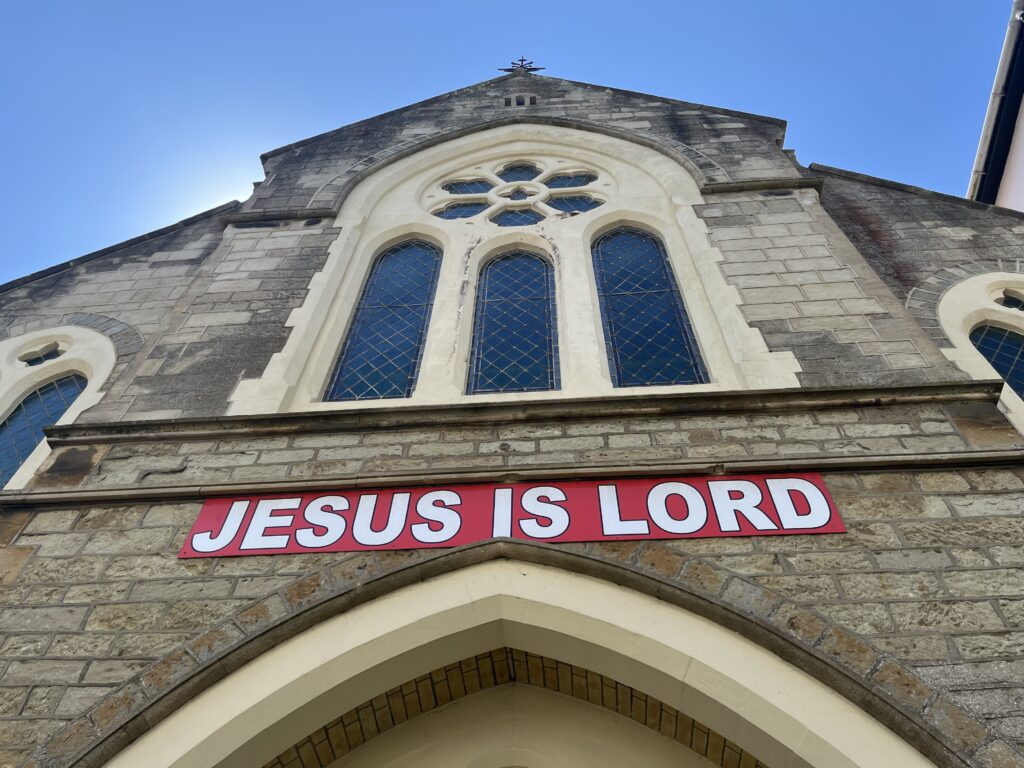
But what about my right to freedom of expression? In the Jesus Trade Mark, (BL /O/021/05) Geoffrey Hobbs Q.C., sitting as the Appointed Person said ” It follows, in my view, that the Hearing Officer was right to conclude that use of the word JESUS as a trade mark would cause greater offence then mere distaste and do so to a significant section of the general public. The use of it as a trade mark should – to use the expression I have used several times already – be regarded as seriously troubling in terms of the public interest in the ‘prevention of disorder’ and ‘protection of morals’ under Article 10 ECHR. It is legitimate to apply the prohibition in Section 3(3)(a) of the 1994 Act to branding which is anti-social by reason of its ability to undermine an accepted social and religious value to a significant extent. That is the position here. There will be cases where the need to adopt a proportionate response to the problem of antisocial branding requires less than 100% rejection of the request for registration. This is not one of them. The power of the word JESUS to give rise to the relevant concern is not diminished by the nature of the goods in the different categories specified by the Applicant in the present case”.
Other marks that have been considered across the EU which have been excluded include (contrary to Article 7(1)(f) CTMR) :
CASTRO (Application 2932986);
RASSISMUS (German word for racism) (Application 2994499);
IPARRETARRAK REKORDS (Iparretarrak -7X:\GH\BASIC being the name of an organisation declared illegal in Spain in 1978) (Application 2677565);
OPIUM (Application 2481935);
BOLLOCKS FAKOV (Application 1672518);
SMS2TV (Application 2334951);
FIDEL CASTRO (Application 921155);
BILLCLINTON (Application 956540);
JOHANNES PAUL II (Application 958280);
FUCK OF THE YEAR (Application 306399);
BOLLOX (Application 499103);
BALLE (German word for testicles) (Application 65839).
More recently only last month the EUIPO’S examiner found that the word mark ‘Pablo Escobar’ is contrary to public policy and the accepted principles of morality (Article 7(1)(f) EUTMR). This was confirmed by the Board of Appeal (BoA). Escobar Inc., a company founded by Pablo Escobar’s brother, sought to register this word mark for various goods and services in Classes 3, 5, 9, 10, 12-16, 18, 20, 21, 24-26, and 28-45.
Michael@trademarkroom.com