Skip to content
The Court of Justice of the European Union has reaffirmed in Case C-365/24 that national trademark name rights, such as company names or phrases, are not governed by EU trademark legislation. Despite this, the rights granted are not rendered powerless; instead, national trademark names can still be used to challenge later trademarks, thanks to core international law and EU trademark principles.
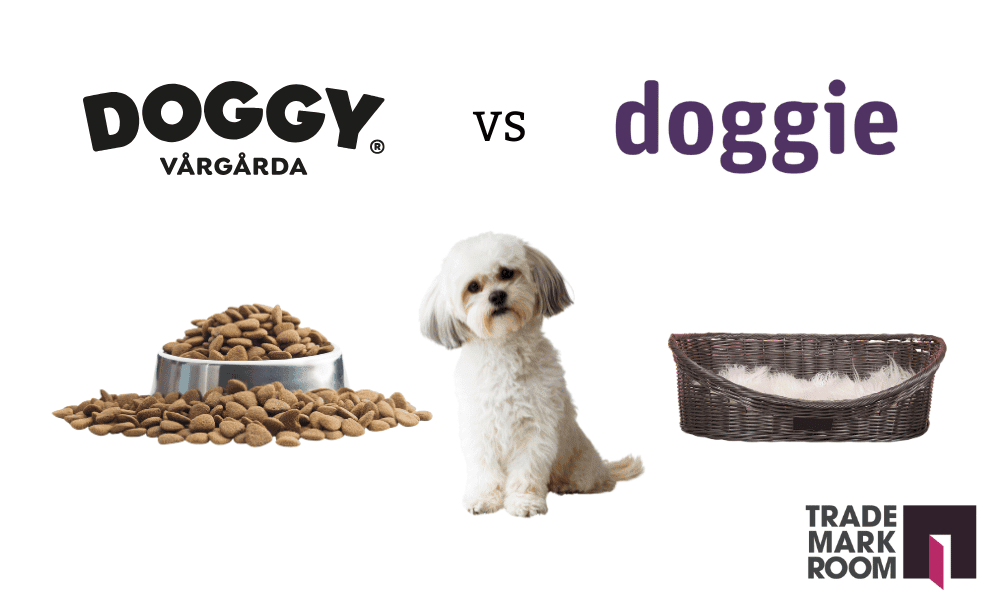
This decision came from a legal dispute between two Swedish companies, both of which were sellers of dog food. The first company is called “Doggy AB” and the second company is called “Purefun Group AB”. The issue arose due to the similarity in business names, specifically “DOGGY” and “DOGGIE”. Despite this seeming like quite a small and irrelevant case, the outcome of this case has implications that go far beyond the pet food industry.
The Dispute: Doggy vs Doggie
Doggy AB owns a registered Swedish word mark, “DOGGY” for animal feed and operates under the company name “Doggy AB”. Purefun Group AB also sells dog food products, but under the name “DOGGIE”.
This case started when Doggy AB sued Purefun Group AB for infringing both its trademark and its company name. In the first instance, Doggy AB won the case. However, through the Swedish court of appeal, the CJEU were forced to clarify whether an older national company name can be used to stop the use of a later trademark for the same or similar goods, even beyond the region where the company name is used.
National Trademark Name Rights: The CJEU’s Ruling
The first point the ruling clarified was that national trade names are not a part of EU trademark law. The EU’s trademark directive has attempted to harmonise trademark law; however, it failed to cover trade names or company names and how they are affected.
Typically, when relying on a company name, such as “Doggy AB,” you must look within the jurisdiction’s law, specifically Swedish law, rather than EU law, to define the scope of your rights. However, the Courts were quick to point out the fact that trade names are automatically still protected under the international treaties binding on the EU, these being: The Paris Convention for the Protection of Industrial Property and the TRIPS Agreement (Article 8). These say:
“A trade name shall be protected in all countries of the Union without the obligation of filing or registration.”
What this means is that you do not have or need to register a trade name for it to be valid and have legal protection across the EU, and more importantly, that the trademark directive of the EU must respect these international obligations imposed. This is confirmed in Recital 41 of the EU Trademark Directive, which explicitly states that the Directive must be entirely consistent with the Paris Convention and the TRIPS Agreement.
However, the ruling has drawn some criticism. Although the Swedish court’s question explicitly addressed whether an earlier national company name could be used to challenge later trademark use, the CJEU narrowed the case and viewed it only as a conflict between two trade names. This move avoided a fuller answer to the broader legal question. It remains unclear why the court did not address the trademark element, even though it appeared central to the original dispute.
Cross-protection is possible under EU trademark rules
Despite trade names not being harmonised, the Trademarks Directive of the EU does allow conflicts between trademarks and earlier signs to be resolved in favour of the earlier right. One key provision that outlines this is Article 5(4)(a) of the Trademark Directive, which allows EU countries to refuse or cancel a trademark if there is an earlier right, for example, a company with that name, that gives exclusive use.
Another key provision is Article 10(3)(d) of the Trademark Directive, which allows trademark holders to stop others from using the same mark in a company name, even if the mark is not a trademark. This is otherwise known as the priority rule, which means that whoever had the right first, whether it be a trade name or a trademark, will typically win the dispute.
No breach of the internal market
One argument Purefun attempted to make was that stopping them from using “DOGGIE” was a violation of European Union law, specifically citing the free movement of goods rule, as outlined in Articles 34-36 of the Treaty on the Functioning of the European Union. The CJEU rejected this argument, citing that restricting a later trade name or a confusingly similar mark is justified by a legitimate public interest to prevent confusion and protect business identifiers and uniqueness. This, in turn, outweighs any restriction or potential violation of European Union law.
What This Means in Practice
Despite this ruling sounding complicated and technical, it is vital. It matters deeply for businesses operating across borders, as it means that trade names can still be a powerful tool, even if they are not registered as trademarks. Thanks to the Paris Convention and the TRIPS Agreement, the rights do not stop at national borders. Even without an EU trademark, you can block someone else’s mark if your trade name came first. This is realised and acknowledged through Articles 5(4)(a) and 10(3)(d) of the Trademark Directive.
A hypothetical example of where this would protect you would be if you were to start a coffee business in Italy in 2015, trading under the name “BeanBrew”. Despite this, you never registered this as a trademark. Recently, you discovered that a German company registered the EU trademark “BEANBREW” for similar products. Even though you have not registered this as a trademark, you still have the right to challenge the use of “BEANBREW” as you have the earlier trade name under national law, you have international protection under TRIPS and the Paris Convention.
Conclusion
In conclusion, while the CJEU did not directly answer the question of whether a national company can stop all uses of conflicting trademarks across the EU, the implication is clear that trade names can be used to stop later trademarks and their use. This is on the provision that the earlier right is valid and that there is a likelihood of confusion. This decision reinforces a critical but straightforward idea in intellectual property law, that seniority and clarity matter and count. At the same time, it reminds us that the CJEU may not always offer a comprehensive answer to the questions referred, leaving some uncertainty for future cross-border disputes involving trade names and trademarks.